
How to Stay Close to Mum When You Live Apart
By Editorial Team

Stay close to mum no matter the distance. Practical ideas, meaningful gifts, and virtual ways to bond. Discover how to keep your connection strong.
Table of Contents
- Why Distance Makes Staying Close to Mum Feel Hard
- Build Routines That Keep You Connected
- Virtual Ways to Bond With Mum That Actually Work
- How to Comfort Someone Long Distance During Difficult Times
- Meaningful Gifts for Mum That Go Beyond a Card
- Small Gestures That Stay Close to Mum Every Day
- Common Mistakes That Quietly Widen the Gap
- Conclusion
Last Updated: August 29, 2026
Why Distance Makes Staying Close to Mum Feel Hard
Staying close to mum when you live apart is genuinely difficult, and not just logistically. The challenge is emotional. You know she's there, you think about her often, but the ordinary moments that once kept you connected, a cup of tea at the kitchen table, a quick chat before work, simply don't happen anymore. That gap can quietly grow into something that feels much harder to bridge.
At Pocket Hugs, we hear this from people all the time. Distance doesn't automatically weaken a relationship, but it does require more deliberate effort to maintain. The problem is that most people wait for the "right moment" to reach out: a birthday, a holiday, a crisis. By the time those moments arrive, the connection has already thinned.
The real obstacle isn't geography. It's the assumption that closeness requires proximity. Many of the strongest bonds between adult children and their mums are built across hundreds of miles, through consistent small gestures rather than grand reunions. The goal isn't to replicate physical presence. It's to create a different kind of closeness that works within the constraints you actually have.
According to research from Age UK on loneliness and social isolation, loneliness among older people is a significant and growing concern, with social connection playing a direct role in both mental and physical wellbeing. That matters here: how you stay close to mum isn't just about your own peace of mind. It genuinely affects hers.
Build Routines That Keep You Connected
The biggest mistake people make is treating connection as something that happens spontaneously. It rarely does when you live apart. Routines are what actually hold relationships together across distance.
Regular Calls Without the Pressure
A common mistake is scheduling calls that feel like obligations. Sunday at 6pm becomes a chore rather than something to look forward to, and both of you can feel it. The fix is to lower the stakes: shorter calls more often tend to work better than long, infrequent ones that carry the weight of "catching up on everything."
A quick ten-minute call on a Tuesday morning, or a voice note sent on the way to work, signals that you're thinking about her without requiring either of you to perform a full conversation. Voice notes in particular are underused. They're warmer than a text, less demanding than a call, and she can listen when it suits her.
The thing nobody tells you about regular calls is that the content matters far less than the consistency. You don't need something significant to say. Sharing something small, what you had for dinner, a funny thing that happened at work, is what builds the feeling of being present in each other's daily lives.
Shared Activities Across the Miles
Shared activities create a sense of parallel experience, which is one of the most underrated ways to stay close to mum when you can't be together. The activity itself is almost beside the point. What matters is that you're both doing something at the same time, or engaging with the same thing, and then talking about it.
Some approaches that work well:
- Watch the same series and message each other reactions as you go
- Read the same book and set a loose date to discuss it
- Play an online word or puzzle game together, even asynchronously
- Cook the same recipe separately and compare notes
- Send each other a photo a day of something that caught your eye
The key is picking something she'll actually enjoy rather than something you think she should enjoy. Start with her interests, not yours.
Virtual Ways to Bond With Mum That Actually Work
Video calls are the obvious answer, but "obvious" doesn't mean they're being used well. Most people default to a catch-up format that can feel a bit aimless after a while. Giving the call a loose structure, even just watching something together, or cooking while you chat, makes it feel more like spending time together rather than reporting in.

Virtual bonding works best when it mimics the texture of ordinary life rather than trying to be a special occasion. Here's a summary of virtual approaches and what each one is genuinely suited to:
| Activity | Best For | Frequency |
|---|---|---|
| Short video call | Regular check-in, seeing each other's face | 2-3 times per week |
| Voice note exchange | Low-effort daily connection, sharing small moments | Daily |
| Watch party (same show) | Shared experience, something to discuss | Weekly |
| Online game or quiz | Lighthearted fun, less pressure to "chat" | Weekly or fortnightly |
| Shared photo album | Keeping her involved in your daily life | Ongoing |
| Virtual meal together | Recreating an ordinary domestic moment | Monthly |
The virtual meal is worth highlighting separately. Eating together over video feels surprisingly natural once you've tried it. It removes the pressure of maintaining constant conversation and recreates one of the most common ways families stay connected in person.
How to Comfort Someone Long Distance During Difficult Times
Knowing how to comfort someone long distance when they're going through something hard is one of the most important skills you can develop. The instinct is often to say something meaningful, but the most comforting thing is usually just to make her feel less alone.
That distinction matters. "I'm here" lands differently than "It'll all be fine." Practical support, ordering a food delivery to her door, arranging for a neighbour to check in, sending something physical she can hold, often does more than the right words.
According to guidance from Mental Health Foundation on emotional support, feeling heard and acknowledged is central to emotional recovery. The goal isn't to fix the situation. It's to witness it alongside her.
Specific things that help when comforting someone long distance:
- Call rather than text when something serious happens. Her voice tells you more than a message, and yours reassures her more than words on a screen.
- Don't wait for her to ask for help. Proactively offer something concrete: "I'm going to order you dinner on Friday, what do you fancy?"
- Follow up. A single message of support is kind. Checking in three days later is what actually makes the difference.
- Send something physical. A letter, a small keepsake, something she can touch. Physical objects carry emotional weight that digital messages can't replicate.
The last point is where many people underestimate their options. A thoughtful object sent through the post can provide ongoing comfort in a way that a phone call, however loving, simply cannot.
Meaningful Gifts for Mum That Go Beyond a Card
Most people default to flowers or a generic box of chocolates when they want to show they're thinking of mum. Those gestures are fine, but they don't linger. A meaningful gift for mum is one she encounters repeatedly, something she carries with her, keeps on her bedside table, or reaches for on a difficult day.
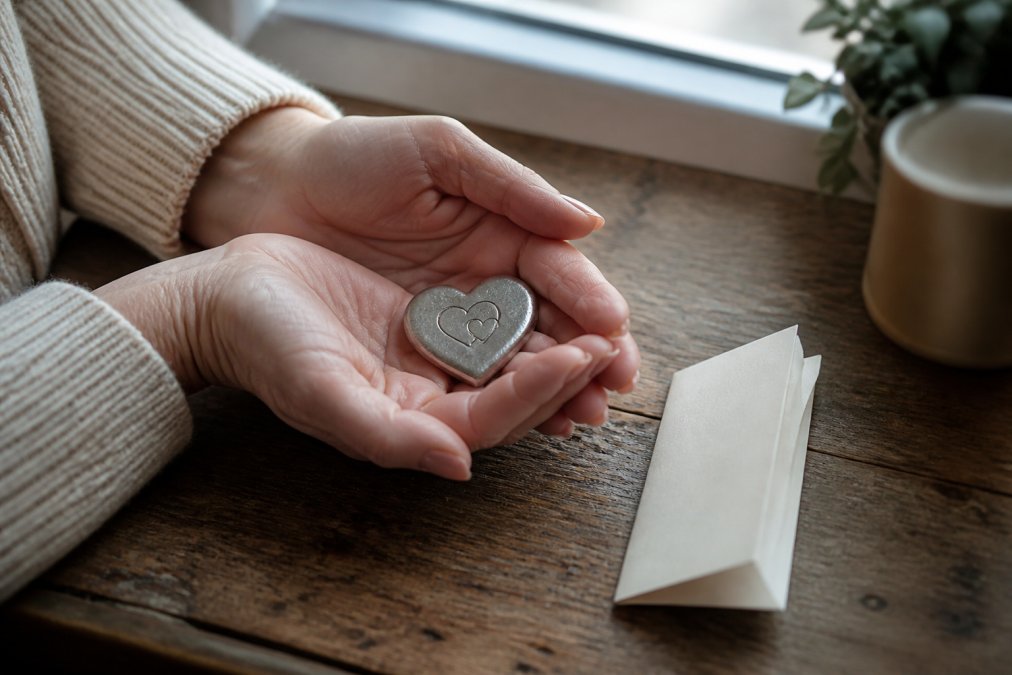
Pocket Hugs specialises in exactly this: hand-finished keepsake gifts designed to be carried everywhere, delivered directly through the letterbox. The idea is that a physical token becomes a portable reminder of affection, something she can hold when she's missing you, rather than something that sits on a shelf and gradually becomes invisible.
What separates a meaningful gift from a forgettable one is portability and personal resonance. A gift she can carry in her pocket or handbag becomes part of her daily life in a way that a vase or a candle never will.
What Makes a Keepsake Gift Feel Genuinely Personal
The question people ask most often is: how do I make sure this doesn't just end up in a drawer? The honest answer is that it comes down to specificity and intention. A gift that references something real, a shared memory, a phrase she uses, something that speaks directly to your relationship, is far less likely to be set aside than a generic keepsake, however beautiful.
Think about:
- What she says she needs vs. what she actually needs. She might say she needs nothing. What she actually needs is to feel remembered.
- Whether it's portable. Something she can carry means she encounters it throughout her day, not just when she's near a shelf.
- Whether it connects to a specific moment or feeling. "I saw this and thought of you" is more powerful than "I thought you might like this."
A hand-finished gift that arrives through the letterbox also removes the friction of missed deliveries and damaged parcels. For people who want to send something thoughtful without the logistics of a large parcel, that practical simplicity matters.
Small Gestures That Stay Close to Mum Every Day
Grand gestures have their place, but they don't sustain a relationship. What actually keeps you close to mum over months and years is the accumulation of small, consistent signals that she's on your mind.
These don't require time or money. They require only the habit of noticing:
- Send her something you know she'd find funny. A news story, a photo, a clip. Not because it's profound, but because it says: I thought of you.
- Remember the small things she mentioned. If she said she had a hospital appointment, follow up. If she mentioned a friend she was worried about, ask how it went.
- Tell her specifically what you appreciate about her. Not "you're a great mum", that's easy. Something specific: "I've been thinking about how you used to do X, and I realise now how much that meant."
- Mark ordinary days, not just special ones. A message on a random Wednesday that says "thinking of you" often lands harder than a birthday card.
The thing most guides miss here is that these gestures work because they demonstrate attentiveness, not effort. She doesn't need you to have done something elaborate. She needs to know you're paying attention.
As noted by NHS guidance on social connection and wellbeing, regular social contact, even brief exchanges, has measurable benefits for mental health and sense of belonging. Small gestures, done consistently, are not trivial. They're the foundation.
Common Mistakes That Quietly Widen the Gap
Most distance doesn't accumulate through dramatic falling-outs. It builds through small neglects that neither person notices until the gap is already wide.
Here's where things tend to go wrong:
Waiting for the "right time" to call. There is no right time. The call you keep meaning to make is the one she notices you're not making.
Treating big occasions as a substitute for regular contact. Christmas and birthdays can't compensate for months of silence. She knows the difference between obligation and genuine interest.
Assuming she's fine because she says she's fine. Many older women, particularly those who don't want to be a burden, will understate how lonely or worried they feel. Consistent contact matters more than any single conversation.
Only reaching out when something's wrong. If she only hears from you during a crisis, connection becomes associated with anxiety rather than warmth.
Sending something generic when something personal was called for. A card that could have been sent by anyone to anyone doesn't say "I know you." It says "I remembered the date."
The common thread across all these mistakes is passivity: waiting for closeness to happen rather than actively creating it. Distance requires you to be more deliberate about connection, not less.
Maintaining a strong bond with mum across distance takes consistency, attentiveness, and the occasional physical reminder that you're thinking of her. The digital tools help, but many people find that something tangible makes the difference, something she can hold when the distance feels heavy. Pocket Hugs offers hand-finished keepsake gifts designed for exactly that purpose, delivered letterbox-friendly so there's no fuss, no missed deliveries, and nothing generic. If you want to stay close to mum in a way that lasts beyond the next phone call, explore what Pocket Hugs has to offer.
Frequently Asked Questions
Q: How often should I talk to my mum to stay close?
A: There is no single right answer, what matters is consistency over frequency. A short voice note three times a week often feels more connected than a long call once a month. Find a rhythm that suits both of you without it feeling like an obligation. Even a brief check-in text on a Tuesday morning can signal that she is on your mind, which is what genuinely keeps the bond warm over time.
Q: What are some thoughtful ways to show mum you care from a distance?
A: Small, specific gestures tend to land better than grand ones. Sending a handwritten letter, sharing a photo that reminded you of her, or posting a hand-finished keepsake she can carry in her pocket all communicate care in a tangible way. The key is personalisation, referencing a shared memory or an inside joke makes any gesture feel like it came from you specifically, rather than something anyone could have sent.
Q: Will a physical gift really help with the distance, or is it just a nice gesture?
A: A physical object does something a message cannot: it stays. When your mum holds a keepsake token or sees it on her bedside table, it acts as a daily reminder that she is loved. A meaningful gift is not a replacement for contact, but it extends the feeling of closeness between conversations and visits.
Q: How can I make my mum feel special on occasions like birthdays when I cannot be there?
A: Plan ahead so the gesture arrives before the day itself. A letterbox-friendly gift means she receives something physical without needing to be home for a delivery. Pair it with a voice message or video so she hears your voice on the day. If other family members are also at a distance, coordinate so she receives several small acknowledgements throughout the day rather than one large thing, it makes the occasion feel extended rather than over in a moment.
This article was written using GrandRanker